 It may not be faster than a speeding bullet, but tomorrow the moon will make its closest approach to earth in 18 years—making the so-called supermoon the biggest full moon in years.

The monthly full moon always looks like a big disk, but because its orbit is egg-shaped, there are times when the moon is at perigee—its shortest distance from Earth in the roughly month long lunar cycle—or at apogee, its farthest distance from Earth.
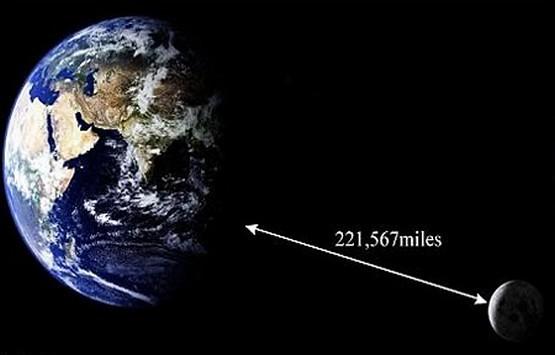
Likewise, because the size of the moon's orbit varies slightly, each perigee is not always the same distance away from Earth. Friday's supermoon will be just 221,566 miles (356,577 kilometers) away from Earth. The last time the full moon approached so close to Earth was in 1993, according to NASA.

The March 19 supermoon, as it's called, will be visible "pretty much any time during the night," said Geza Gyuk, astronomer at the Adler Planetarium in Chicago.
"Look for the full moon as it rises above the eastern horizon as the sun sets below the western horizon—it will be a beautiful and inspiring sight," he said via email.(Rest of the information can be found on: National Geographic)
